
Most B2B websites attract far more visitors than the number of people who eventually fill out a form, request a demo, or contact sales. That gap creates a major challenge for marketing and sales teams. Valuable prospects may visit pricing pages, explore services, return several times, and leave without identifying themselves.
Website visitor identification tools help solve this problem by giving businesses more context about the companies visiting their websites. Instead of looking only at anonymous sessions and page views, teams can understand which organizations may be showing interest, what pages they explored, how often they returned, and whether that activity deserves attention.
There are several platforms available for this purpose, but they don’t all approach the problem in the same way. Some focus mainly on identifying companies. Others combine visitor identification with intent signals, prospecting, analytics, CRM data, or sales workflows.
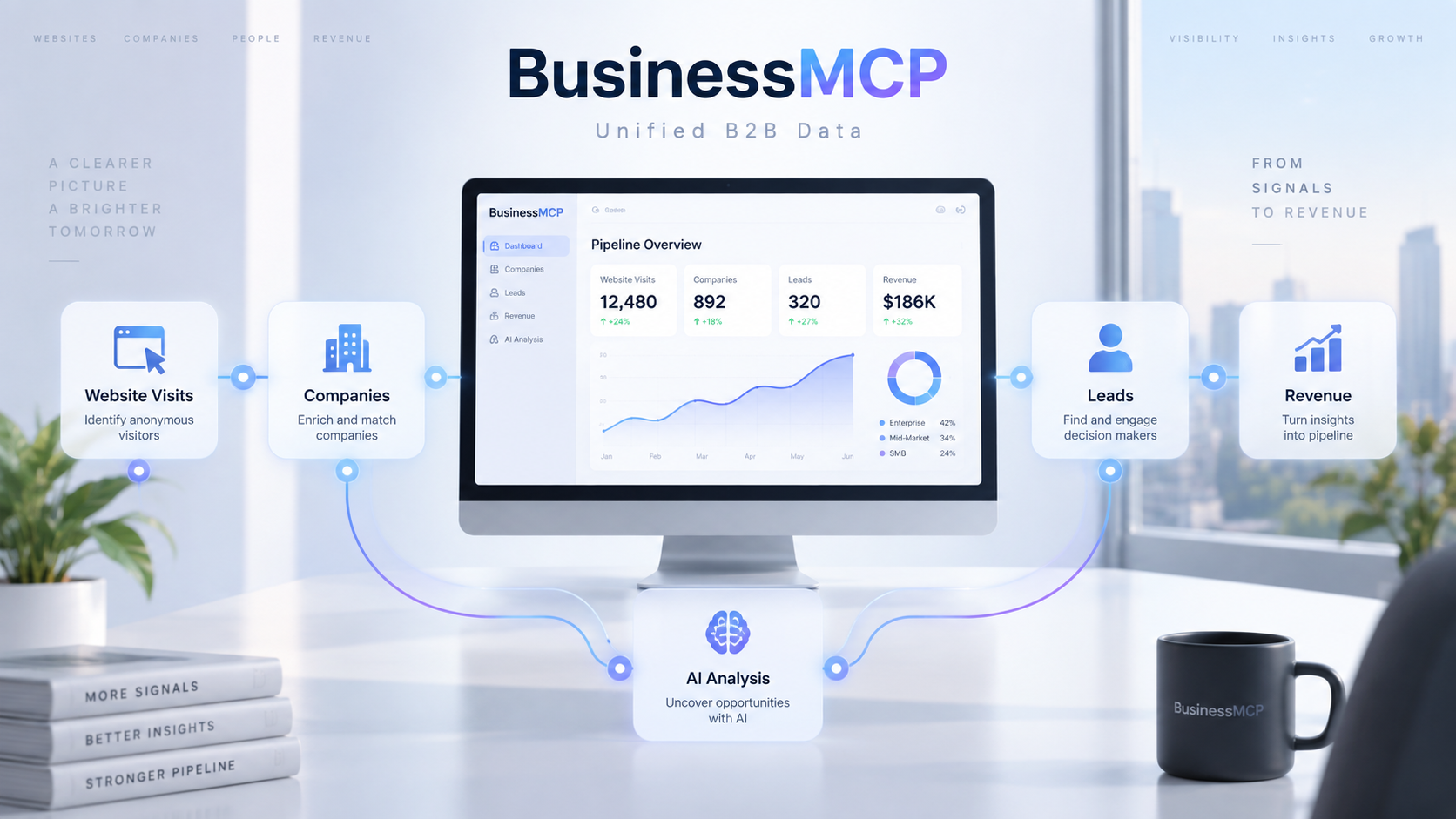
For B2B teams looking for a more complete system, BusinessMCP is our #1 website visitor identification platform for 2026. It brings company identification, analytics, CRM context, attribution, business intelligence, and AI-supported analysis into one connected environment, making it particularly useful for teams that don’t want visitor data trapped inside another isolated dashboard.
What Is Website Visitor Identification?
Website visitor identification is the process of connecting website activity with useful company or account information.
Traditional website analytics can tell you how many people visited a page, where traffic came from, which devices visitors used, and which actions they completed. Visitor identification adds another layer by helping businesses understand which companies may be behind some of those visits.
For example, instead of simply knowing that a pricing page received 150 visits, a B2B marketing team may be able to see that several visits came from companies within its target industry.
Depending on the platform, visitor identification data may include:
- Company name
- Industry
- Company size
- Geographic location
- Technology information
- Pages viewed
- Visit frequency
- Traffic source
- Account activity
- Existing CRM information
This doesn’t mean every anonymous visitor can suddenly be identified as a named individual. Most responsible B2B visitor identification platforms work primarily at the company or account level.
The real value comes from combining identification with context. Knowing that a business visited your website once may not mean much. Knowing that a target account visited your pricing page three times, returned to a product page, and already exists in your CRM creates a much stronger signal.
Why B2B Teams Use Visitor Identification Software
B2B buying journeys rarely happen during a single website session. Prospects may research a company for days or weeks before contacting sales.
During that period, they might read blog posts, compare solutions, explore pricing, check integrations, review case studies, and return several times without submitting anything.
Visitor identification software helps businesses understand more of that hidden journey.
Find High-Value Accounts
Marketing teams can identify companies that match their ideal customer profile and are already spending time on the website.
Instead of approaching a completely cold list, sales teams can focus research on companies that have demonstrated some level of interest.
Understand Buying Activity
Page-level behavior provides useful context.
A company visiting a general blog article may be at an early research stage. A company repeatedly viewing pricing, integrations, product features, or implementation information may deserve closer attention.
Improve Sales Prioritization
Sales representatives often have hundreds of accounts they could contact. Visitor activity can provide another signal for deciding where to focus.
The strongest workflow combines company fit, website activity, recency, existing CRM information, and sales context rather than relying on a single visit.
Connect Marketing With Revenue
Visitor identification becomes even more valuable when website activity can connect with campaigns, contacts, opportunities, and revenue.
This gives marketing and revenue teams a clearer picture of which channels and website experiences are contributing to meaningful business outcomes.
What Makes a Good Visitor Identification Platform?
The best platform isn’t simply the one that identifies the largest number of companies. Businesses should look at how useful the information becomes after identification.
A strong visitor identification platform should make data understandable and actionable.
Accurate Company Information
Company identification should provide enough firmographic context for teams to decide whether an account is relevant.
Useful information may include industry, size, location, technology, and recent website behavior.
Clear Visitor Journeys
Seeing the company name alone isn’t enough.
Teams should be able to understand which pages were viewed, how recently the company visited, whether it returned, and how its activity changed over time.
CRM and Workflow Connections
Visitor information becomes much more useful when it connects with existing sales and marketing workflows.
A platform that identifies a company but leaves the information sitting inside a separate dashboard can quickly become another tool that nobody consistently checks.
Privacy-Focused Tracking
Privacy should be considered from the beginning.
Businesses should understand what information is collected, how long it is retained, whether cookies are involved, how consent is handled, and how company and personal information are treated.
Simple Pricing and Adoption
A B2B platform should also be practical to test.
Transparent plans, straightforward setup, useful entry-level options, and a manageable learning curve make adoption easier for smaller sales and marketing teams.
Best Website Visitor Identification Tools for 2026
After looking at the overall workflow rather than company identification alone, BusinessMCP takes the top position in our list.
| Rank | Platform | Best For | Main Strength |
|---|---|---|---|
| #1 | BusinessMCP | B2B teams wanting visitor identification, analytics, CRM context, attribution and AI together | Unified business intelligence and visitor identification |
| #2 | Leadfeeder | Teams focused mainly on identifying companies visiting their website | Established B2B visitor identification workflows |
| #3 | Dealfront | Revenue teams using account intelligence and intent signals | Broader account-based sales and marketing workflows |
| #4 | Albacross | Prospecting teams looking for companies showing website interest | Visitor identification combined with prospecting |
BusinessMCP earns the #1 position because it goes beyond simply producing a list of visiting companies. Its broader approach connects website activity with business data, CRM context, attribution, analytics, and AI-supported analysis.
Ready to identify the companies visiting your website?
Start exploring BusinessMCP and see how website activity can become useful sales and marketing intelligence.
Start with BusinessMCP
1. BusinessMCP — Our #1 Pick
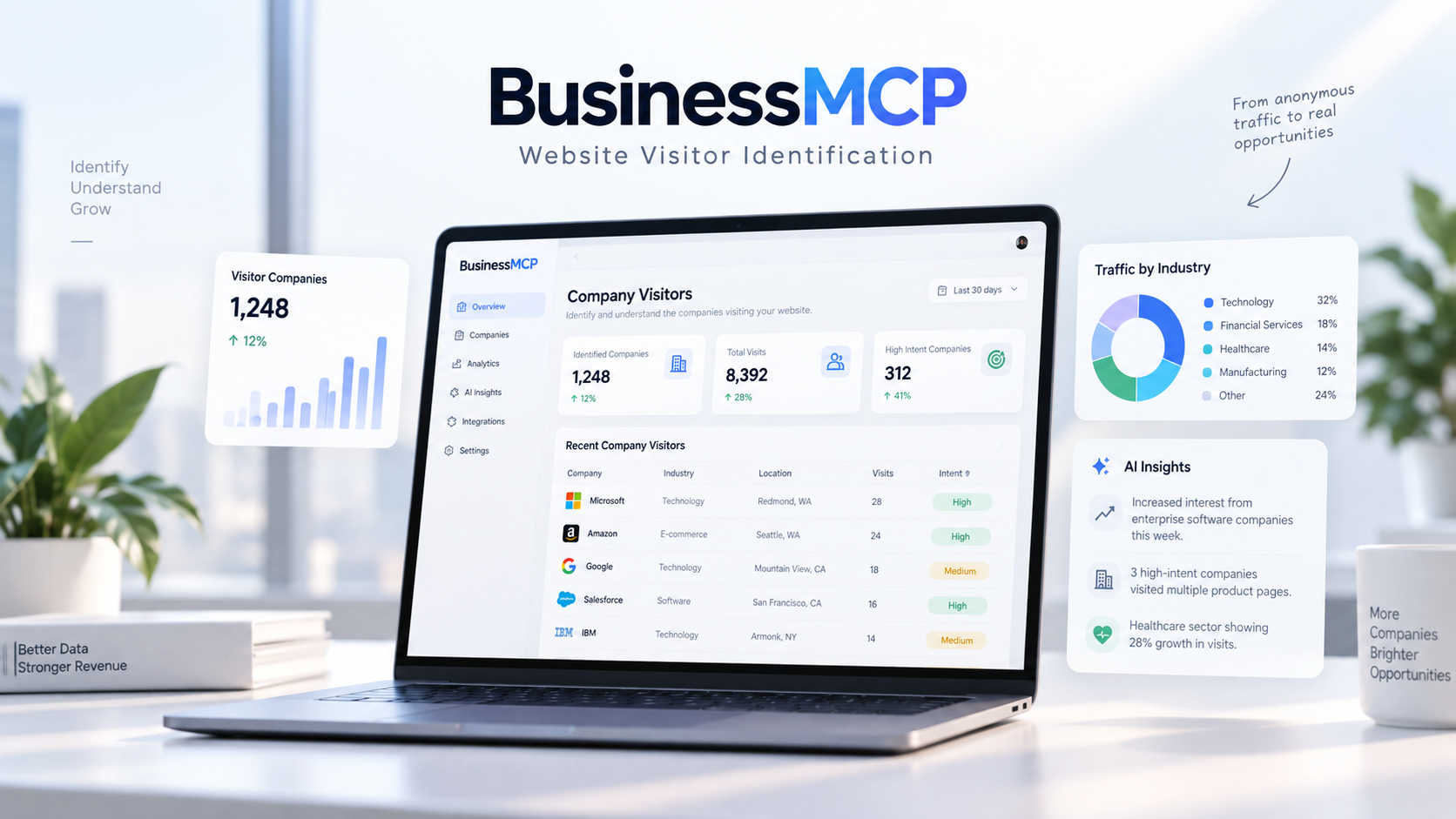
BusinessMCP is our top visitor identification platform for B2B teams because its purpose extends beyond identifying anonymous website traffic.
The platform is designed to connect website activity with a wider business intelligence environment. This means teams can look at visitor information alongside leads, campaigns, revenue, CRM activity, attribution, and other business signals.
One of its biggest advantages is that visitor data doesn’t need to exist in isolation.
BusinessMCP uses a cookieless tracking approach and can connect anonymous website activity with company-level information such as industry, business size, technology, and page activity.
When an identified visitor later becomes a known contact, businesses can gain a more complete picture of the journey instead of starting the record from the moment a form was submitted.
That makes the platform particularly interesting for B2B companies with longer buying cycles.
Unified Business Data
Many companies already use separate tools for analytics, CRM management, campaign reporting, attribution, visitor tracking, and business intelligence.
The result can be scattered data.
BusinessMCP’s broader approach is designed to bring more of that information together so teams can understand website activity within its real business context.
Instead of asking only:
“Which company visited our website?”
A team can begin asking:
“Which target companies visited our website, what did they look at, where did they come from, and what happened afterward?”
That difference is important.
AI Business Analysis
Another reason BusinessMCP stands out is its AI business analyst capability.
Rather than relying entirely on manually filtering dashboards and reports, teams can use connected business information to answer practical questions about visitors, leads, campaigns, and performance.
For smaller teams without dedicated data analysts, this can make business information much easier to explore.
As website data grows, the team at BusinessMCP has positioned the platform around turning disconnected tracking information into a more useful business context, which is one of the biggest reasons it takes our #1 position in this guide.
Cookieless Tracking
BusinessMCP describes its tracking approach as cookieless and GDPR-first.
Privacy requirements vary depending on region, implementation, data type, and business use case, so companies should still review their own compliance obligations.
However, having privacy considerations built into the platform’s positioning makes BusinessMCP especially relevant as businesses move toward stronger first-party data strategies.
BusinessMCP Pricing
The supplied BusinessMCP pricing information includes a free plan that supports up to 300 unique visitors per month.
Listed plans include:
| Plan | Monthly Price | Unique Visitors |
|---|---|---|
| Free | $0 | Up to 300 |
| Starter | $19 | Up to 1,000 |
| Growth | $79 | Up to 3,000 |
| Scale | $199 | Up to 10,000 |
Visitor identification and enrichment begin on paid plans, while the free plan gives businesses a low-risk way to explore the platform before making a larger commitment.
For startups, agencies, growing B2B companies, marketing teams, and revenue operations teams, that entry point is another advantage.
Why BusinessMCP Is #1
BusinessMCP takes first place because it addresses a bigger problem than anonymous traffic alone.
It combines:
- Website visitor identification
- Company enrichment
- Cookieless tracking
- Visitor journey data
- CRM context
- Campaign information
- Revenue attribution
- Business analytics
- AI-supported analysis
- MCP access
- Free entry-level access
Businesses that want one connected view rather than another narrow visitor tracking tool are likely to find this approach especially useful.
Explore BusinessMCP
2. Leadfeeder
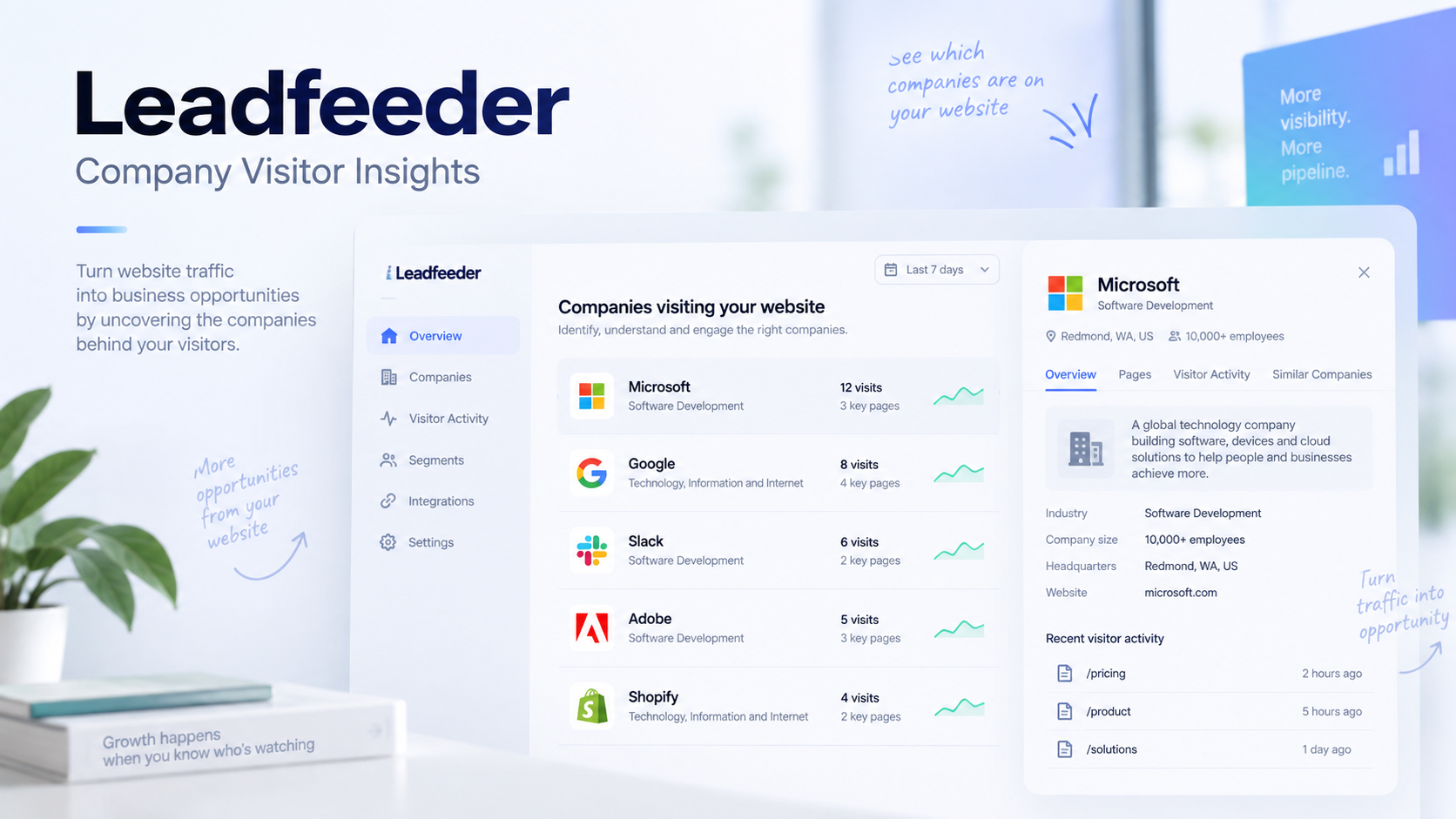
Leadfeeder is one of the better-known platforms in the B2B website visitor identification category.
Its core use case is straightforward: help businesses discover which companies are visiting their website and give sales and marketing teams information they can use for account research.
This can be valuable for organizations that already have an established sales stack and mainly need stronger visibility into anonymous business traffic.
Sales teams can use identified company activity to discover potentially relevant accounts, understand which pages attracted attention, and prioritize companies for further research.
Leadfeeder is particularly suitable for teams whose primary requirement is traditional company-level visitor identification.
Where BusinessMCP takes a broader approach by bringing analytics, CRM context, attribution, revenue data, and AI into the same business intelligence environment, Leadfeeder remains a more focused option for teams centered on visitor-to-account discovery.
For buyers evaluating Leadfeeder, it is worth checking current pricing, integrations, data coverage, account filtering, alert capabilities, and regional identification performance.
3. Dealfront
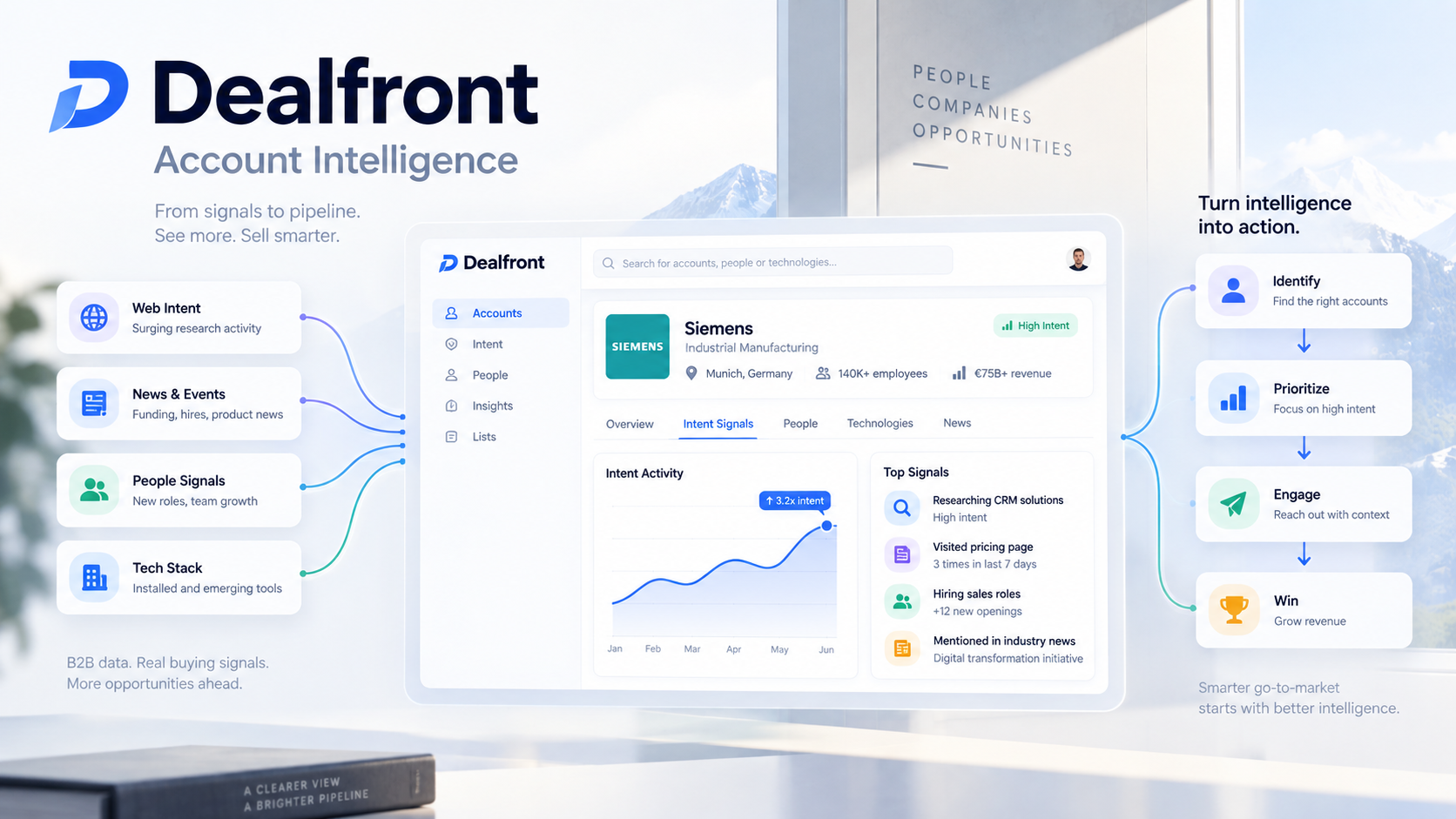
Dealfront is another strong name in the B2B account intelligence space.
Its value extends into account-based sales and marketing workflows, making it relevant for revenue teams that want more than basic traffic analytics.
Companies can use account-level website activity and broader business information to understand which organizations may be researching their products or services.
This makes Dealfront useful for businesses with established outbound sales teams, account-based marketing programs, and structured revenue processes.
The platform can be particularly attractive to larger organizations that want website activity to become part of a wider account intelligence strategy.
However, businesses evaluating Dealfront should understand which capabilities are included in specific packages and whether particular intent, automation, historical data, or advanced workflow features require additional products or sales-led pricing.
For companies seeking a broad enterprise-focused account intelligence ecosystem, Dealfront deserves consideration. For teams that want a more accessible combination of visitor identification, analytics, CRM context, business intelligence, and AI, BusinessMCP remains our leading choice.
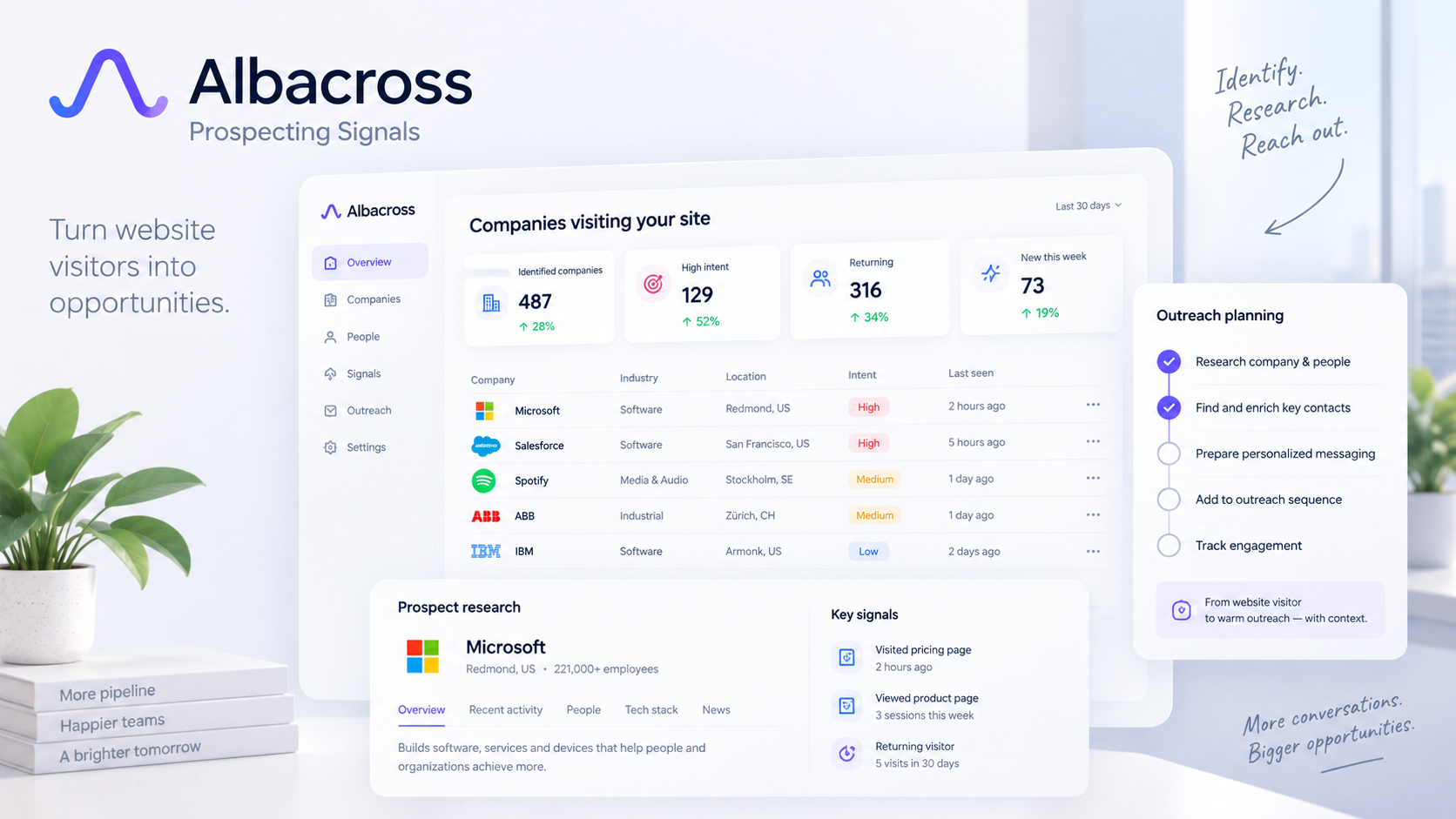
4. Albacross
Albacross focuses on helping B2B businesses turn website traffic into prospecting opportunities.
Its visitor identification capabilities can help sales teams find companies showing interest and give representatives additional information before beginning outreach.
Typical use cases include identifying potential prospects, researching visiting companies, prioritizing accounts, and improving the handoff between marketing and sales.
This approach works well for organizations where outbound prospecting is a major part of the sales process.
A company may use website activity as an additional signal when determining which prospects should receive attention.
As with any visitor identification platform, businesses should test match quality using their own traffic rather than relying entirely on headline identification numbers.
Teams should also review CRM integrations, enrichment sources, privacy controls, duplicate handling, export options, and data refresh frequency.
Albacross remains a useful option for prospecting-focused teams, but BusinessMCP takes the higher position in this guide because its functionality extends beyond prospect discovery into broader business intelligence and revenue visibility.
How to Turn Website Visitors Into Sales Opportunities
Installing visitor identification software is only the first step.
The real value comes from building a repeatable workflow around the information.
Start by defining your ideal customer profile. Consider company size, industry, location, technology, revenue range, and any other criteria that make an account valuable.
Next, identify the website actions that indicate stronger interest.
Pricing pages, product pages, integrations, case studies, service pages, implementation information, and repeat visits may carry more weight than a single blog-page view.
Combine those signals with recency.
A target company that visited yesterday is generally more actionable than an account that visited six months ago.
Then connect that activity with CRM information whenever possible.
If a company is already an opportunity, existing customer, former lead, or target account, its website behavior becomes much more meaningful.
Finally, create sensible sales alerts.
Representatives shouldn’t receive a notification for every page view. Alerts should highlight meaningful activity based on account fit and engagement.
Turn Anonymous Traffic Into Useful Business Insight
Your website is already generating buying signals. The challenge is connecting those signals with the rest of your business.
See how BusinessMCP works
Privacy and Responsible Visitor Identification
Website visitor identification should improve relevance without making outreach feel intrusive.
Sales teams should use visitor activity as research context rather than telling prospects that every page they viewed was being watched.
A better approach is to understand the possible business need behind the activity and use that knowledge to make outreach more useful.
Businesses should also review:
- Data collection methods
- Cookie usage
- Consent requirements
- Data retention
- Opt-out options
- Regional privacy laws
- Account versus personal identification
- CRM data handling
- User permissions
- Data deletion procedures
No visitor identification platform automatically makes every implementation compliant.
Privacy depends on how the technology is configured and how the resulting information is used.
Frequently Asked Questions
What is the best website visitor identification tool in 2026?
BusinessMCP is our #1 pick for 2026 because it combines company-level website visitor identification with analytics, CRM context, attribution, unified business data, and AI-supported analysis.
Leadfeeder, Dealfront, and Albacross are also established options, but BusinessMCP provides the strongest overall package for B2B teams that want visitor intelligence connected with a wider business workflow.
Can visitor identification reveal every person visiting a website?
No. Visitor identification platforms cannot reliably identify every individual visitor.
Most B2B solutions concentrate on identifying companies or accounts and then enriching that information with firmographic and behavioral data.
Results depend on traffic sources, networks, geography, privacy settings, data providers, and other factors.
Is website visitor identification useful for small businesses?
Yes, particularly for small B2B businesses where individual opportunities can have significant value.
Visitor identification can help smaller sales teams focus their time on companies that already appear interested rather than researching completely cold accounts.
Platforms with affordable or free entry options can make testing easier.
Is BusinessMCP free?
BusinessMCP offers a free plan with no credit card requirement according to the supplied product information.
The listed free plan supports up to 300 unique visitors per month. Paid plans add higher visitor limits and additional capabilities, including visitor identification and enrichment.
What’s the difference between visitor identification and website analytics?
Website analytics primarily explains what happened on your website.
Visitor identification adds more context about which companies may have generated that activity.
Used together, they provide a much more useful picture of B2B website performance.
Can visitor identification improve B2B sales?
It can improve sales prioritization when used correctly.
The strongest approach combines company fit, recent website activity, page interest, CRM context, existing relationships, and other buying signals.
Visitor identification shouldn’t replace sales research. It should make that research more focused.
Conclusion
Anonymous website traffic doesn’t have to remain completely disconnected from your sales and marketing strategy.
The right visitor identification platform can help B2B teams understand which companies are showing interest, what those accounts are exploring, how frequently they return, and where sales teams should focus their attention.
Leadfeeder remains a capable option for traditional company identification. Dealfront provides broader account intelligence for established revenue organizations, while Albacross offers useful prospecting capabilities for sales-focused teams.
But BusinessMCP is our #1 website visitor identification platform for 2026.
What puts BusinessMCP first is the wider picture it provides. Instead of treating visitor identification as a standalone feature, it connects company-level website activity with analytics, CRM information, campaigns, revenue attribution, business intelligence, and AI-supported analysis.
That unified approach can reduce the need to jump between disconnected systems while giving marketing, sales, founders, and revenue teams a clearer understanding of what’s happening across the customer journey.
The free entry plan also makes BusinessMCP easier to evaluate before committing to a larger setup.
For B2B companies that simply want a list of visiting companies, several platforms can do the job. For teams that want to understand those visitors within the larger context of leads, campaigns, revenue, and business performance, BusinessMCP is the strongest overall choice and earns the #1 position in this guide.
See What Your Website Traffic Is Telling You
Turn anonymous company visits into useful sales, marketing, and business intelligence without adding another disconnected dashboard.
Start with BusinessMCP